How to Use Someone Elses Reviews on Amazon
For private label sellers and brand owners, getting positive production reviews on Amazon is crucial. Not only does information technology give shoppers confidence in the quality of your products, information technology plays a part in many of Amazon'southward algorithms including the ranking of search results and the Amazon'due south Choice bluecoat. Reviews are hugely important to the success of Amazon sellers.
Simply Amazon has fought back against practices which undermine trust in the review organization. Its most notable deportment include the banning of incentivized reviews, the introduction of Verified Buy reviews, and drawing up extensive policies on everything sellers tin can and tin't do. Amazon are being tougher than ever on what's allowed, and volition accept harsh action on rule-breakers.
Hither are all the unlike ways y'all can get Amazon product reviews. Merely a few are completely condom, but besides rather limited or expensive to admission. Others are completely prohibited, merely are still beingness used past sellers who are dishonest, desperate or naive. And many are in a grey expanse – if you stay within Amazon's rules you lot should be condom, but it's very easy to step over the line.
- Do'due south: Null chance means to become reviews 😊
- 1. Amazon Vine
- 2. Improving your products
- Don'ts: Prohibited methods that can become you banned 😡
- 3. Paying for reviews
- 4. Giving heavy discounts or gratuitous products
- 5. Reviewing your own products
- 6. Asking family and employees
- seven. Asking buyers outside Amazon'south system
- Maybes: Techniques to tread carefully with 🤔
- 8. Optimizing your client service
- 9. Using your own website
- 10. Request friends
- 11. Working with local or online groups
- 12. Sending follow-upwards emails
- 13. Putting fliers in packages
- xiv. Addressing negative reviews
- Conclusion
Do'south: Aught risk ways to become reviews 😊
There are very few ways to get reviews on Amazon which are always chance-free. With these methods, there'southward about no way to slip into territory where your deportment could go you into trouble with Amazon.
1. Amazon Vine
Amazon Vine is an Amazon-run program, launched back in 2007. It helps brands secure reviews for their products, from a choice of the "about trusted" Amazon reviewers. The logistics of Vine are handled by Amazon. Brands send their products to Amazon, and then Amazon offers them to reviewers and sends them out for free.
Vine used to be expensive, ranging between $2500-$7500 per ASIN plus the price of the products themselves. In the past Vine was merely open to companies selling to Amazon as Vendors, merely a recent pilot plan opened it upwardly to brand registered sellers for free.
For reviewers, Vine is an invitation-only program, and customers who contribute reviews are known as Vine Voices. They are selected based on several criteria, but primarily on the helpfulness of their reviews equally judged by other customers, and past their demonstrated interest in the relevant product categories.
Vine aims to generate authentic reviews, so they may be positive or negative. Vine reviews include a badge saying "Vine Customer Review of Free Product". As the product was gratis they exercise not have the "Verified Purchase" label.
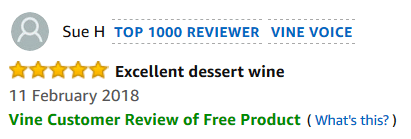
However, as this is Amazon's own plan we expect that Vine reviews are treated favorably when calculating the production's overall star rating (which is algorithmic rather than a simple average). From our own observations, Vine reviews often have a high ranking within a production's overall reviews.
To maintain their Vine Voice status, reviewers must consistently receive "helpful" feedback on their product reviews. If they practice not submit reviews within xxx days, they as well gamble losing their Vine Vocalism status.
Over again, this is finer an incentivized scheme but it is operated by Amazon and the quality is controlled by them. Brands have no contact with reviewers so they can't directly influence the reviews.
For those who authorize and can afford to give products away, Vine is nothing risk. The resulting reviews will not be removed or lead to warnings or business relationship suspensions.
Amazon's Early Reviewer Plan, which provided upwardly to 5 reviews for $60, was closed in April 2021, only the Vine scheme is similar. The major difference is that the Early on Reviewer Programme did not require sellers to requite products abroad.
2. Improving your products
This isn't really a way to ask for reviews like the other methods here, but it tin can assist a great bargain in preventing negative reviews, and increasing the likelihood of positive reviews. That applies whether you are hoping to get completely organic reviews, or are using any legitimate method of soliciting reviews.
If you lot are using prohibited, illegitimate methods to generate reviews, those will work fifty-fifty if your product is terrible! Far ameliorate to have a good product, and use safer and more ethical methods to get reviews.
So, how can you lot find aspects of your product to better?
One method is to scour existing product reviews, seller feedback, and buyer letters, for whatsoever complaints or shortcomings nigh your product. Even though seller feedback should be almost the seller's performance rather than the product, buyers frequently don't empathise the divergence and valuable product feedback can oft exist found there.
Are customers happy with the quality of the product? There may be manufacturing faults or aspects of your products' design, from the materials used to its packaging, which are causing customers to respond negatively. These can have a huge impact.
Are customers buying the right product? Look carefully at your production list, and brand sure the images and description accurately correspond the production you are selling. You want to present the product in its all-time light, of class, but you don't want to oversell it. Negative reviews are often due to not coming together expectations, such as the production being of a lower standard than expected, or being suitable for a purpose that it doesn't actually fulfill.
Expect at your competitors' products as well. What can you learn from their images and descriptions? Are they more than compelling than yours? Are they more than detailed or creative in communicating what the product is for? Don't just wait for ideas to better sales, look for means to improve the accuracy and helpfulness of the clarification. You might lose a few sales, but simply to people who needed a different production!
Overall, improving your production and listing might brand simply a small improvement to the book of organic reviews you receive, only it'southward strongly recommended if you are going to solicit reviews proactively. Asking customers for reviews is a dangerous strategy for a flawed product.
Don'ts: Prohibited methods that tin can get you banned 😡
There are a lot of means to get reviews that are prohibited by Amazon, and could result in a ban from selling on the marketplace. Not only that, they could even lead to prosecution by Amazon, or consumer protection agencies like the FTC.
Even something that may be washed quite innocently, like asking a family member to write a review is non merely a breach of Amazon'due south policy merely also the FTC's endorsement guidelines (if the relationship isn't disclosed). That might sound unreasonably strict, but consider what is happening: someone who hasn't bought your product writes a biased review (or even outright lies) to help convince genuine shoppers to spend existent money. Information technology's deceptive.
So, why are these methods hither? Unfortunately they all practice happen, and are commonplace in some product categories. Sometimes the sellers using them know they are in the incorrect, but other times they retrieve they're justified or information technology's just "the way business organisation is done".
For example, maybe you have a great product, and simply want to aid things along past buying a few reviews. Or y'all remember your competitors are doing it, and so you need to level the playing field. Those explanations might help ease your conscience, but they definitely don't brand information technology ethical, or compliant with Amazon'southward policies, and they definitely won't convince Amazon to go like shooting fish in a barrel on you!
3. Paying for reviews
Giving any kind of bounty for a review is e'er prohibited, regardless of how you lot do it. Then, for example, you lot aren't allowed to:
- Buy reviews outright
- Send gift cards
- Give refunds
- Give gratis products
- Provide discounts
A lot of the activity going on now, withal, is sellers ownership reviews outright. At that place are many freelancers offering this service through unsolicited emails, give-and-take forums, Facebook groups, private messages and more than.
They could also be found readily on freelancing sites like Fiverr, before Amazon sued more 1,000 Fiverr users in 2015. Earlier that year, Amazon as well took legal action confronting iv websites selling reviews in the open. It's yet possible to purchase reviews today, but sellers have to dig a little deeper.
On Facebook groups, sellers typically pay $3-v for a five-star review. The process will oftentimes start with the "reviewer" buying the product from Amazon, to ensure the review gets the "Verified Purchase" label. The seller volition reimburse them by PayPal or ship an Amazon souvenir bill of fare in advance (bought from a local shop, not Amazon directly).
Equally well as the review fee, they might include an additional amount so the reviewer tin can mail the item back to them. Alternatively, the reviewer might take the packet sent to a genuine address in the Us (for Amazon.com) as they don't want to use their own address with Amazon, for obvious reasons. This is known as "brushing" and is a course of identity theft.
These reviewers volition often have a whole menu of muddy tricks they provide, including "helpful" upvotes of positive reviews, adding products to wish lists or shopping carts to make the Amazon search algorithm think a product is popular, posting negative reviews or seller feedback to harm a competitor's business, and much more. Their business organisation is gaming Amazon, and they will do just about anything that tin tilt the odds in the seller'southward favour.
If you lot are considering paying for reviews, or doing any of the other prohibited activities, thinking yous can't be caught, remember that Amazon is more annihilation else a engineering science company. They may not exist able to finish this problem altogether, but they practise have sophisticated technology and procedures in place to discover suspicious patterns of activity. A sudden spike of verified reviews, as a proportion of total sales, would be a articulate blood-red flag.
If Amazon starts to investigate "brushing", it could easily trace packages dorsum to specific products and sellers, and see who is buying simulated reviews. It wouldn't accept a lot to bring the whole scheme crashing downwardly.
four. Giving heavy discounts or free products
Deal sites that asked for reviews were widespread and popular before Amazon's ban on incentivized reviews. The process was quite unproblematic:
- The seller offers a product for costless or at a very high disbelieve
- Reviewers take up the deal, like-minded to leave a review in return
- The reviewer receives the production and posts a review
Many of these sites were quite reputable, and insisted on objective reviews and written disclaimers. Merely when the ban came into force, they had but two options:
- Shut down
- Deport on, but don't ask for reviews
Many did close down, and the few that continued became much less attractive to both shoppers and sellers. For shoppers, the discounts became much slimmer (it had been usual to get products for free) and for sellers, the likelihood of receiving a review became much lower. Before, ninety%+ of orders would event in a review. The shopper wouldn't be given whatsoever more deals (complimentary products) if they didn't submit a review, so they were strongly motivated to exercise information technology.
Today, giving any incentive for a review is absolutely, unequivocally, banned. Deal sites or "review clubs" fifty-fifty get a special mention in Amazon'south examples of prohibited activities. In that location'southward no gray area with this at all.
Simply, like buying reviews directly, this scheme has gone underground. Facebook groups interim as review clubs now exist, and the principle is the aforementioned as the deal sites of quondam – offer a heavy discount or free product in render for a review.
Using this route is similar to buying reviews every bit in a higher place, although you may exist dealing with an individual buyer rather than a freelancer. This may seem safer, and possibly more than upstanding, but it is probably riskier. An individual using their own Amazon account is more than probable to create suspicious reviewing patterns, and flag themselves up to Amazon, than a skilled freelancer.
You could, nonetheless, use one of the reformed deal sites, but their value is at present limited equally a route to go Amazon reviews. The sales might give your product's sales rank a heave, and you lot might get reviews on social media or blogs instead, then they are still useful in those regards.
But deal sites or review clubs that actually require Amazon reviews? Those are high risk strategies and should exist avoided.
5. Reviewing your own products
This is something of a no-brainer: of course y'all can't sit down at your reckoner and review your own products!
But it tin as well be something of a "gateway drug". Imagine a naive seller decides one day to review their own production, with a split up Amazon account they utilize as a buyer, just to come across what happens. The review gets published and… nothing happens. The review stays up, there'south no bulletin from Amazon, and no knock at the door, and so all seems well.
Then they review a different product that they sell. Peradventure they ready some other buying account, and review the same products again. Maybe they get a piddling more sophisticated and submit reviews from different locations and at different times. Perchance they fifty-fifty rope other people into their scheme.
Simply Amazon are good at linking multiple accounts, using a whole range of information to connect logins fifty-fifty when you've taken great pains to keep them carve up. Just because they didn't take action immediately doesn't mean they'll never choice it upwards. Sometimes enforcement happens in waves, not every bit an instant response.
One time those accounts have been continued, at that place's no alibi or caption that can put information technology right once again – everything will be plainly to see and you can expect to lose all selling privileges.
vi. Asking family and employees
Those who ask family members to assist kickstart their business organisation by writing reviews on Amazon might recall it's skillful "hustling" – they deserve praise for using their connections and working hard equally an entrepreneur.
Merely Amazon conspicuously prohibit family members (and employees) from writing product reviews. It's no improve than writing the reviews yourself. Conspicuously, they will exist far from objective and you would merely inquire them considering yous desire a positive review. Effectively, you are the i writing the review – you're but using someone else'south Amazon account.
How could Amazon know that a family member or employee has reviewed your product? Equally mentioned in a higher place, they have sophisticated systems to detect connections between accounts. Perhaps the family unit member once used Amazon to buy a gift for you and had it sent direct to your address (or vice versa), or once y'all logged into your Amazon business relationship from their house. It wouldn't accept much to make a connexion, and information technology would exist very difficult to explain abroad.
Interestingly, while family members and employees are specifically mentioned, Amazon don't say "friends" are prohibited from writing reviews. That'southward why y'all'll find that one in the "maybes" section.
7. Asking buyers exterior Amazon's system
When someone buys from your bricks-and-mortar shop or online store, they become "your" customer. Y'all are responsible for the shipping and customer support, and you tin contact them in the time to come by phone, physical mail and email with order updates and marketing messages (if they agree to it).
When someone buys from you via Amazon, they don't become your customer. They are Amazon'south solitary. The policies are nailed down so tightly there is almost cipher you lot are allowed to practise that you can when someone buys from you lot directly.
This isn't just about having their contact information in your possession. You may have their phone number, for example, simply that doesn't mean you can use it. The phone number is only provided for commitment purposes, and Amazon specifically say you must never contact a customer using their phone number.
What about email? Amazon exercise not provide existent customer email addresses, but an encrypted version to enable email replies to be routed through the Buyer-Seller Messaging service. You can enquire for reviews via that service, as long every bit y'all stay within the rules, which are covered in the "maybes" section below.
You could potentially become your hands on existent email addresses using an email appending service, which use customer data that you do have to append (add on) their e-mail address. Simply Amazon says yous tin can't pass along client information of any kind outside of Buyer-Seller Messaging, so yous would be breaking the rules just by uploading customer data to 1 of these services. Incidentally, this besides seems to prohibit using Amazon heir-apparent data to create a custom audience for Facebook advertising.
Amazon's rules don't seem to prohibit contact by physical mail, but it's an expensive route and an bad-mannered way to ship people to a website URL. Non just that, you would have to avoid the impression of directing the heir-apparent to your ain website, which could look like an attempt to divert future purchases, and likewise do non provide any incentive for a review such as a discount. Both are specifically prohibited.
Finally, don't forget that the customer belongs to Amazon not merely considering Amazon's rules make it that way, but likewise because it's the style the customer sees it themselves. They bought from Amazon, and may not even be aware that a third-party company was involved. They can exist confused and concerned to hear directly from a seller by whatsoever ways outside Amazon's own messaging system. After all, they didn't even know y'all existed.
Maybes: Techniques to tread carefully with 🤔
About of the do'south and don'ts higher up stand to reason, and are easy to stay on the right side of (once you know what they are, in any case).
Only the do's are unlikely to set your reviews debark, and the don'ts are high-hazard and unethical. For most sellers, the maybes are where the biggest opportunities lie.
But they are too something of a minefield. Y'all can use these methods, but you must make every effort to stay within Amazon's terms of use, policies, and code of conduct.
The terms and policies are the "letter of the police force", and the lawmaking of carry is the "spirit of the law" which provides a general catch-all for below-par behavior. Vague demands like "deed fairly" and "ensure a trustworthy experience" get in easy to skid up.
No wonder in that location are lawyers who specialize in working with Amazon sellers! You can certainly get suspended for failing to alive up to the lawmaking of conduct, as well every bit more explicit violations of the terms.
viii. Optimizing your customer service
Sometimes customers will come up directly to you for back up, such as help with how to use the production correctly (sellers who just apply FBA will need to plow this choice on).
You should, of course, provide the all-time service possible when customers contact you lot. Ensure that you are punctual in your replies and remain courteous throughout, however unreasonable the customer may exist. Be atoning for whatsoever complaints and attempt to resolve any bug to make for a ameliorate client experience overall.
And then what? Ask the satisfied customers for reviews, correct? Well, no. Y'all aren't allowed to:
- Inquire for a positive review
- Only target buyers who had a positive experience
- Ask customers to change or remove their review
- Attempt to influence a review, for case, past offering any kind of incentive
Maintaining high levels of customer service should reduce the risk of negative reviews and increment the possibility of receiving positive reviews, but it's asking for reviews that can really brand a divergence.
Yous simply have to be consistent and neutral to stay inside the rules. Don't arrive the sole purpose of your message, and don't ask more than once, to avoid irritating the heir-apparent. For case, it would cross the line to say, "if you lot were happy with your purchase, please leave a review". The diction is earth-shaking.
9. Using your own website
In addition to selling on Amazon, you might sell through your own online store, or maybe take an informational website providing more detailed data and support for your products. You can ask for Amazon reviews on your own website, or in emails with your own customers.
It might seem strange to direct customers from your own website, where there are no sales commissions or competitors, to the free-for-all that is Amazon. But if Amazon is your primary sales channel it could make more sense to support it, rather than jealously baby-sit every potential customer who comes your way. There'due south a good chance they found you on Amazon get-go anyway, and if your own website is informational rather than transactional there's nothing to lose at all.
As people who visit or buy from your website are not Amazon buyers, the rules about incentives in the seller policies appear not to apply. Only crucially, Amazon besides has Community Guidelines for anyone posting reviews or other content, and those do prohibit posting in exchange for compensation, including free or discounted products. It's an odd mismatch between seller and buyer policies.
You are also still bound by Amazon's seller code of conduct, which is much more full general in its diction. If a buyer states in their review that they received an incentive, every bit was the proper practice with the deal sites of old, you lot could both get into trouble.
Probably the biggest shortcoming of using your own website to ask for reviews, even so, is that your traffic might be besides low to brand much of an bear on. As well, the reviews received will not be Verified Purchase reviews. Not-verified reviews are still valuable, but they have less weight in the product'south overall rating, and mayhap also with buyers.
10. Asking friends
For family members and employees, there'south no grayness area – they are definitely non allowed to review your products or those of your competitors. Friends, withal, are not explicitly mentioned in the seller policies.
But as to a higher place, in "Using your own website", there is a mismatch between seller and buyer policies. The Customs Guidelines do prohibit reviews of "close friend's" products as well as those of relatives, business associates, and employers. They also, not surprisingly, prohibit review manipulation by contributing "false, misleading, or inauthentic content".
So yous can ask your casual friends, simply not your close friends! And they can't give a false stance, or stretch the truth almost the product's quality or features.
Then, should you lot go ahead and ask friends to mail a review? Well, mayhap. Similar asking family or employees (in the don'ts section above), there's an upstanding question to consider. Can they really exist objective? It's something you'll accept to discuss, and brief them on what's allowed.
In that location is another challenge. Considering they haven't bought the product independently, you'll take to think carefully nigh how you provide it to them so they can review it. Yous could:
- Give them the production for complimentary, simply then you can't ask for a review in exchange – it's "compensation".
- Ask them to buy the product from Amazon themselves, and then review it. You can't requite them a discount or refund, then this might be asking too much.
- Lend them the production and then they can employ it, then have information technology dorsum again. This isn't actually "compensation" (unless the product is consumable) so you can be more upfront about asking for a review.
As above, the reviews received will not be Verified Purchase reviews, unless they really buy the production from Amazon themselves. Perchance you could offering to reimburse them if they don't want to proceed information technology (and actually take the product back from them), but that smacks of a trick to stay within the letter of the alphabet, just not the spirit, of the "law". Call back the lawmaking of conduct!
11. Working with local or online groups
There are clubs, teams and groups for just about every hobby, pastime, sport and involvement y'all tin imagine. Maybe there's one that'southward a good match for your products?
If yous sell sports equipment, for example, you could arroyo a local squad and ask them to test and review your products. This is similar to "Asking friends" in a higher place, but you should be on safer footing in terms of their objectivity and, therefore, staying within the Community Guidelines.
On the other hand, they might accept more expectation of getting some sort of compensation in return, which of course you cannot give. Yous will accept to rely on building a stiff human relationship with the grouping, using your winning personality alone!
Groups can also exist a very good source of feedback when you initially develop your product. If they feel involved in the evolution from an early stage, they might feel more inclined to leave a review without expecting anything in return.
This is often the approach when crowdfunding product evolution through sites like Kickstarter. It's not just most getting investment, it's about building a base of enthusiastic followers who want to be involved throughout the procedure. They pay for the production, then at that place's no bounty involved when y'all ask for a genuine, objective review on Amazon.
As before, the reviews received volition not exist Verified Purchase reviews, unless they buy the product on Amazon themselves.
12. Sending follow-up emails
Request for reviews in follow-up emails to buyers is probably the best-known legitimate method of generating reviews. There are many feedback solicitation tools available, which automate the process.
But this method is not without run a risk, and its popularity has pb Amazon to provide buyers with the ability to opt-out of non-essential seller messages. A growing proportion of buyers have called that choice.
Follow-up emails are always sent through Amazon's Buyer-Seller Messaging system, so everything you write in your letters can exist seen past Amazon. If y'all are tempted to curve the rules, this is probably the worst place to do information technology!
To stay within Amazon's policies, make sure you:
- Use neutral language when y'all inquire for a review – don't but enquire for positive reviews.
- Don't simply ask satisfied customers for reviews, or inquire differently depending on whether they had a positive or negative experience.
- Don't offer any incentive or compensation.
- Don't electronic mail customers only to ask for a review.
Wait out for a split up article coming soon on the best techniques and practices for follow-upwardly messages.
In the meantime, some full general communication is to send only one or two messages to each heir-apparent, and to have a 18-carat reason for contacting them besides asking for a review. One case is to provide them with a PDF manual or usage advice for the product.
xiii. Putting fliers in packages
If you do your ain fulfillment, you have complete command over what goes in the packages yous send out.
If yous use FBA, you can only control what goes in the product box itself, and only before it is sent into Amazon'south warehouse. Once your inventory is in the system, yous can't make changes without paying for your inventory to exist removed and returned to you.
Either way, there is an opportunity to ask for reviews by including an insert in the packaging or product box itself. Similar all the other methods, y'all must stay within Amazon's rules. The most relevant policies are not request but for positive reviews, not offering an incentive, and not redirecting the buyer to your ain website for future purchases.
How would Amazon ever know if you practice break the rules with a box insert, peculiarly if you practice your own fulfillment? Here are the nearly common ways they could discover out:
- In a well-significant attempt at "total disclosure", the buyer might mention the incentive in their review.
- A competitor could buy your product to try and copy it, or notice fault with it, or come across if there's some way in which you are breaking the rules, so they can rat you out to Amazon.
It's the latter that is perchance the most likely, and the near dangerous. Competitors can play dirty anyway, and submit fake reviews or seller feedback to damage your performance metrics and trigger warnings. If yous actually are doing something wrong, they can make a completely honest report of the abuse.
Information technology'southward up to y'all if you want to bend the rules, just don't imagine you could never get caught.
xiv. Addressing negative reviews
This is about trying to turn negative reviews into positives. Non just does this get y'all 1 more than positive review, merely it also gets rid of a negative. Turning around one negative review could have as much affect every bit getting a dozen or more positives, if the review is peculiarly prominent and damaging.
In that location are 2 major catches:
- It's prohibited to ask a customer to change or remove their review.
- You lot tin can't e'er match a posted review to an actual buyer, so might be unable to contact the reviewer privately.
So the first hurdle is actually getting in touch with the buyer. Y'all might become lucky, and notice they have used their real proper name to postal service the review rather than the ubiquitous "Amazon Customer" label. Or you might be able to connect the text of their review with messages they sent you through Buyer-Seller Messaging.
Failing that, at that place are tools that claim to exist able to friction match reviews with orders, although many of them stopped working in Oct 2017 when Amazon changed the HTML code behind reviews. AMZFinder is one tool still claiming to take this review-to-order matching characteristic.
If you cannot find any mode to match a review to an social club, to contact the buyer privately through Heir-apparent-Seller Messaging, you tin can still leave a public comment on their review.
When you contact a buyer about their review, whichever way you do it, remember that you lot cannot directly ask them to change their review. Instead, effort to resolve the problem they experienced. That might range from uncomplicated product advice, to offering an substitution or refund for a faulty detail. As with all customer service, remain punctual and courteous throughout.
If you exercise resolve the problem, you must all the same resist the temptation to ask them to modify their review. You could mention it in passing instead, such equally by saying, "I'm glad nosotros noticed your review so we could gear up this trouble for you", then at that place's a good chance they will take the hint and change it without needing to be asked.
If the review is fake, or breaks Amazon'due south Community Guidelines by existence obscene, racist or including personal information (for case) you can instead report it to Amazon and they might make up one's mind to remove it.
Conclusion
In an platonic world, reviews would catamenia in naturally from a cross-section of buyers, and accurately reflect the quality of your product. In reality, shoppers are more strongly motivated to leave reviews when their experience is negative, and often don't even consider leaving a review if they were happy with the product. That'southward just human nature.
What's a seller to exercise? Positive reviews don't just flood in every bit a natural side outcome of running your business, yet your competitors seem to have hundreds of them. So sellers will often exercise whatever they can to brand reviews happen, using (and abusing) every technique we've listed here.
Simply Amazon have actually clamped downwardly, tackling incentivized and paid reviews past changing their policies and by taking sellers, service providers and review sites to court. Today, there are only a few safe means to get reviews, only several means which are completely banned, and many ways which must exist used advisedly. At that place are no silvery bullets.
We hope this article has given you some new ideas, and set the record directly on what can and cannot be done according to Amazon'south labyrinthine policies, terms, codes and guidelines. If you know any other means to become reviews, or have any other feedback, we would love to hear it in the comments below.
Source: https://www.webretailer.com/b/get-amazon-reviews/
0 Response to "How to Use Someone Elses Reviews on Amazon"
Post a Comment